What Happens to the Standard Devitation of a Data Set if You Add 5 to Every Number in the Set
Standard deviation is used in statistics to tell u.s.a. how "spread out" the data points are. Having one or more than data points far away from the mean indicates a large spread – just in that location are other factors to consider.
So, what affects standard difference? Sample size, hateful, and information values affect standard deviation, since they are used to summate standard deviation. Removing outliers changes sample size and may modify the mean and bear on standard deviation. Multiplication and changing units will also impact standard difference, but addition will not.
Of course, it is possible by take chances that removing an outlier will leave the standard departure unchanged. It is important to become through the calculations to come across exactly what volition happen with the data.
In this article, we'll talk well-nigh the factors that touch standard deviation (and which ones don't). We'll besides expect at some examples to make things clear.
Let's get started.
What Affects Standard Deviation?
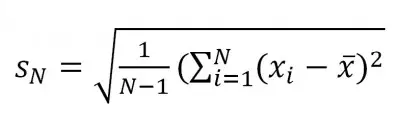
Standard deviation has the formula
Standard deviation is used in fields from business and finance to medicine and manufacturing.
Some of the things that affect standard divergence include:
- Sample Size – the sample size, N, is used in the calculation of standard deviation and can affect its value.
- Removing Outliers – removing an outlier changes both the sample size (N) and the mean, so information technology tin affect the standard deviation.
- Multiplication – multiplying all data values by a abiding value K will touch the standard deviation (scaling it by K).
- Add-on – calculation (or subtracting) the aforementioned value to every data indicate will modify the mean, but information technology will not change the standard difference.
- Changing Units – changing units is multiplication by a abiding, then it volition impact standard deviation (for example, changing from feet to inches means multiplying by 12).
- Mean – the mean is used in the calculation of standard deviation and tin affect its value.
Let'due south take a look at each of these factors, forth with some examples, to see how they bear on standard deviation.
Does Sample Size Affect Standard Difference?
Sample size does bear upon standard deviation. The sample size, Due north, appears in the denominator under the radical in the formula for standard divergence.
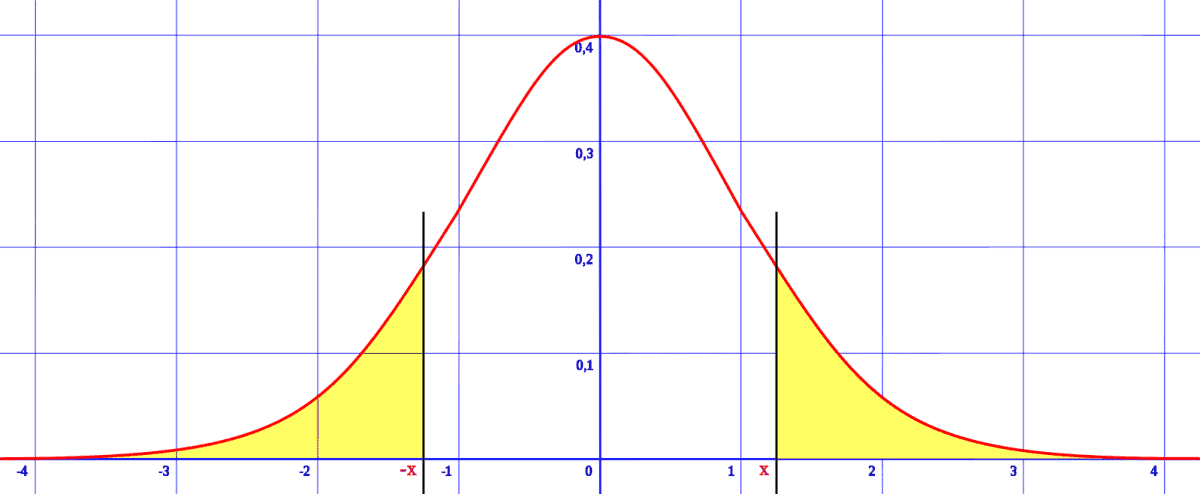
Then, irresolute the value of N affects the standard deviation. Changing Northward also affects the mean.
Example 1: Changing Northward Changes Standard Deviation
For the data gear up S = {one, three, 5}, we have the following:
- N = 3 (there are 3 information points)
- Mean = 3 (since (1 + three + v) / 3 = 3)
- Standard Deviation = 2
If we change the sample size by removing the third data point (5), nosotros have:
- S = {1, three}
- N = 2 (there are 2 information points left)
- Mean = 2 (since (one + 3) / 2 = two)
- Standard Deviation = i.41421 (foursquare root of 2)
And then, irresolute N changed both the mean and standard departure.
Of form, it is possible by take chances that changing the sample size will leave the standard deviation unchanged.
Example 2: Changing Due north Leaves Standard Difference Unchanged
For the data set Due south = {1, 2, 2.36604}, we have the following:
- N = 3 (there are iii data points)
- Mean = 1.78868 (since (1 + 2 + 2.36604) / iii = 3)
- Standard Deviation = 0.70711
If we change the sample size by removing the third data point (two.36604), we have:
- S = {1, 2}
- Northward = 2 (there are 2 data points left)
- Mean = 1.5 (since (1 + ii) / 2 = i.5)
- Standard Difference = 0.70711
So, changing N lead to a change in the mean, only leaves the standard deviation the same.
Does Removing An Outlier Bear on Standard Deviation?
Removing an outlier affects standard departure. In removing an outlier, we are irresolute the sample size N, the mean, and thus the standard deviation.
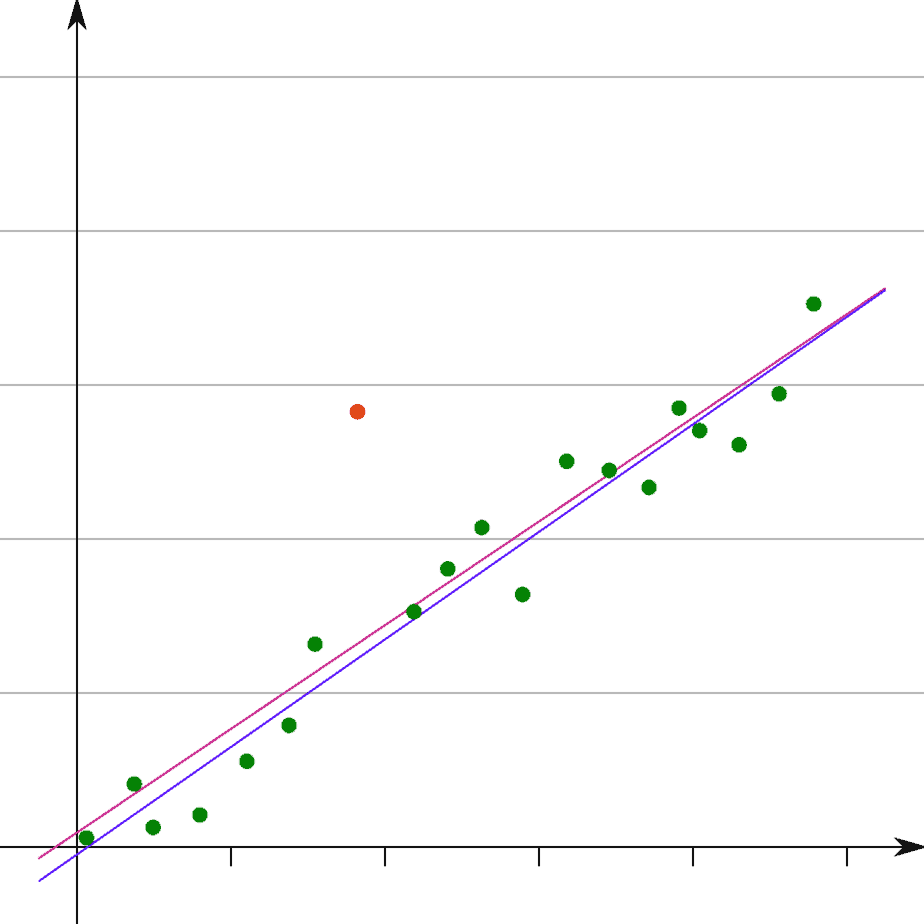
Case: Removing An Outlier Changes Standard Departure
For the information fix S = {i, iii, 98}, we have the following:
- Northward = 3 (there are 3 information points)
- Hateful = 34 (since (one + iii + 98) / iii = 34)
- Standard Departure = 55.4346
If we change the sample size past removing the third data point (98), nosotros take:
- S = {one, ii}
- N = 2 (there are 2 information points left)
- Mean = 2 (since (one + 3) / two = two)
- Standard Deviation = 1.41421 (square root of 2)
So, changing Due north changed both the hateful and standard deviation (both in a significant way).
Does Addition Touch Standard Deviation?
Add-on of the same value to every information point does not affect standard deviation. However, it does affect the mean.
This is because standard divergence measures how spread out the information points are. Adding the same value to every data point may give united states of america larger values, simply they are still spread out in the exact aforementioned way (in other words, the distance between information points has not inverse at all!)
Example: Addition Does Not Modify Standard Departure.
For the data ready Due south = {1, two, three}, we have the following:
- N = iii (there are iii data points)
- Mean = 2 (since (1 + 2 + 3) / 3 = 2)
- Standard Deviation = 1
If we add together the same value of v to each data bespeak, we have:
- S = {vi, seven, 8}
- Due north = three (at that place are still three data points)
- Mean = 7 (since (6 + 7 + 8) / iii = seven)
- Standard Deviation = 1
So, adding 5 to all data points inverse the mean (an increment of 5), just left the standard divergence unchanged (it is nevertheless 1).
Does Multiplication Affect Standard Difference?
Multiplication affects standard deviation by a scaling factor. If nosotros multiply every data indicate by a constant K, so the standard departure is multiplied by the same factor Thou.
In fact, the mean is besides scaled past the aforementioned cistron Thou.
Example: Multiplication Scales Standard Difference By A Gene Of Grand
For the information set S = {1, ii, 3}, we take the following:
- North = 3 (at that place are 3 data points)
- Mean = ii (since (1 + 2 + three) / 3 = ii)
- Standard Deviation = 1
If we use multiplication by a cistron of K = 4 on every betoken in the data set, nosotros have:
- Due south = {4, 8, 12}
- North = 3 (in that location are all the same 3 data points)
- Mean = eight (since (iv + eight + 12) / 3 = viii)
- Standard Deviation = 4
So, multiplying past K = iv also multiplied the hateful past 4 (information technology went from ii to eight) and multiplied standard deviation by four (information technology went from 1 to 4).
Does Changing Units Affect Standard Deviation?
Changing units affects standard deviation. Any change in units will involve multiplication by a constant Thou, so the standard departure (and the hateful) will also be scaled by G.
Case: Irresolute Units Changes Standard Deviation
For the data set S = {1, 2, 3} (units in feet), we have the following:
- N = three (at that place are 3 data points)
- Hateful = 2 feet (since (1 + 2 + three) / 3 = ii)
- Standard Difference = 1 foot
If we desire to convert units from feet to inches, we use multiplication by a factor of K = 12 on every signal in the data ready, we have:
- Due south = {12, 24, 36}
- North = 3 (there are however iii data points)
- Mean = 24 (since (12 + 24 + 36) / 3 = 24)
- Standard Deviation = 12
So, multiplying past K = 12 too multiplied the mean past 12 (it went from 2 to 24) and multiplied standard deviation by 12 (information technology went from one to 12).
Does Hateful Affect Standard Deviation?
Hateful affects standard deviation. To summate standard deviation, we add together up the squared differences of every data point and the mean.
However, it tin can happen past take chances that a unlike mean volition lead to the same standard divergence (for example, when we add the aforementioned value to every information betoken).
This is because standard difference measures how far each data signal is from the mean. So, the data set {ane, 3, five} has the same standard deviation as the set up {ii, 4, 6} (all nosotros did was add together i to each data point in the start set to get the 2d set).
See the example from earlier (calculation five to every data indicate in the gear up {i, 2, 3}): the mean changes, just the standard deviation does not.
You lot can larn more well-nigh the difference betwixt mean and standard divergence in my article here.
Conclusion
At present you know what affects standard divergence and what to consider about outliers and sample size.
Y'all can acquire about how to use Excel to calculate standard deviation in this article.
Y'all tin learn virtually the units for standard deviation here.
You might as well be interested to learn more than most variance in my article hither.
You can larn more most standard deviation calculations in this resource from Texas A&Thou University.
As well, Penn Country Academy has an article on how standard difference can exist used to measure out the adventure of a stock portfolio, based on variability of returns.
This article I wrote will reveal what standard difference can tell us about a data set.
I promise yous found this article helpful. If so, please share it with someone who can use the information.
Don't forget to subscribe to my YouTube channel & get updates on new math videos!
~Jonathon
Source: https://jdmeducational.com/what-affects-standard-deviation-6-factors-to-consider/
0 Response to "What Happens to the Standard Devitation of a Data Set if You Add 5 to Every Number in the Set"
ارسال یک نظر